GenAlpha’s Love for All Things Analog - and How It May Save Us
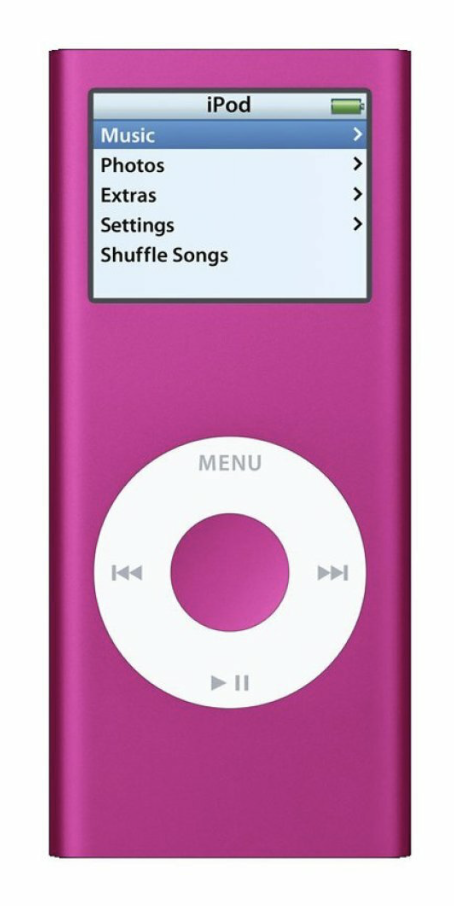
What do Sony Walkman, iPod touch and a rotary phone have in common? GenAlpha’s distinct and passionate interest.
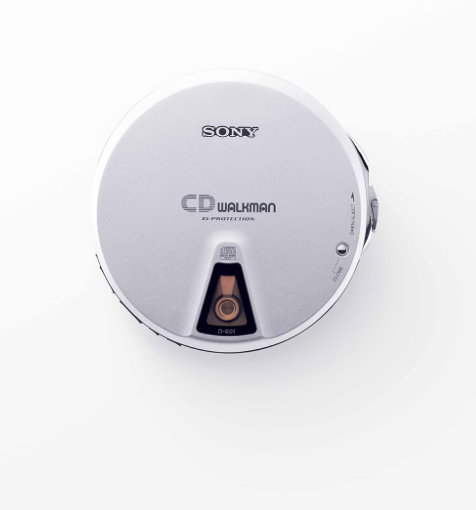
I’m not talking casual, “what was it like to use those things, Mom?” interest, but “I need to have one in my life” interest.
The kind of interest driven by hearing others talk enthusiastically about them, even romantacizing these devices. And supported by an aesthetic (GenA and their aesthetics!) that feels retro cool and gives 80s/90s/2000s energy which is just so. them.
But I don’t think this is only about aesthetic nostalgia. Something deeper is happening.
These objects represent a different tempo of living. A rotary phone demands patience. A Walkman requires intention. An iPod touch—limited, offline, finite—holds music in a way that feels contained and personal rather than infinite and ambient.
Gen Alpha has never known technological pacing. Their world streams, scrolls, refreshes, updates: continuously. And so these devices, obsolete to us, function almost like tactile pauses. They introduce friction back into experience. They make interaction slower, more deliberate, more bounded.
In a culture of constant acceleration, even the youngest consumers are seeking ways to decelerate: to hold something that doesn’t update, doesn’t notify, doesn’t disappear into the cloud.
These artifacts don’t just look retro. They feel finite. And finiteness, for Gen Alpha, may be the new luxury.
I also think something about them feels real - maybe even more human.
That instinct toward the tangible and bounded shows up in how this generation is orienting to technology more broadly. They are growing up inside AI acceleration, yet already asking questions about authorship, trust, and ethics that older generations have postponed.
An important study by Teneo earlier this year among Alphas in the US and UK found Gen Alpha “value transparency over trendiness and honesty over hype, seeking out people and brands that feel genuine rather than algorithmically amplified.”
In that light, their fascination with obsolete devices makes sense. These are technologies you can see working. You press. You turn. You wait. Cause and effect are legible. Nothing is hidden behind models or clouds. They restore a sense that humans are still in the loop.
And this desire for legibility doesn’t mean rejection of digital life. Quite the opposite. Gen Alpha are prolific makers—across both physical and virtual domains.
From a recent Vogue study:
Digital Crafting: 33% of Roblox users are Gen Alpha, using the platform to build worlds.
Physical Crafts: 42% enjoy traditional handicrafts such as knitting and crochet.
Interest in Robotics/Coding: 43% enjoy robotics, and 36% enjoy computer coding.
AI Creativity: Over a third (39%) are experimenting with AI-generated images, videos, or building apps.
What connects knitting, Roblox world-building, coding, and even AI experimentation is authorship. They want to shape technology, not just consume it. To understand how it works. To leave a fingerprint.
Which is why their relationship with AI, in particular, is so nuanced.
In a qualitative study I conducted late last year, tweens and teens expressed a range of emotions - from curiosity to disgust - about AI-generated images. Alongside fascination sat unease: Who made this? Does it count? What happens to human creativity? Many voiced concern about how AI might affect their own future careers, especially in creative fields.
So the same generation romanticizing Walkmans and rotary phones is also learning to code and prompt models. But that’s not contradiction - it is actually quite coherent. Both impulses emerge from the same place: a desire for technology that remains human-scaled, intelligible, and ethically grounded.
Will Gen Alpha be the generation that pumps the brakes and forces us all to think harder about technology governance and responsible use? I hope so. And I can already see it happening—not just in my own home, but in research across categories far beyond tech.
If Gen Alpha is orienting toward technologies that feel graspable, governable, and human-scaled, the implications for brands are profound.
This is not a cohort that will be satisfied by seamlessness alone. Nor by AI deployed as spectacle. Or by overly-designed or illegitimate “trust” markers.
They are already developing a discernment about what feels engineered versus what feels made, what feels opaque versus what feels understandable, what feels extractive versus collaborative.
Which means designing for Gen Alpha without designing with them will increasingly ring false.
The opportunity for brands is not simply to market authenticity, but to operationalize it: to make creation visible, participation real, and agency shared. To invite young consumers into the shaping of products, interfaces, aesthetics, and even governance norms around emerging technologies.
We are already seeing signs of what resonates: platforms that allow modification and world-building, products that can be customized or hacked, experiences that reveal process rather than conceal it. Environments where cause and effect are legible and contribution leaves a trace.
For insight teams, this raises the bar. Gen Alpha cannot be understood through attitudinal surveys alone, nor through adult interpretation. Their relationship with technology is embodied, observational, and context-dependent. It lives in how they tinker, remix, refuse, decorate, and negotiate their spaces in real time.
Which is why qualitative, observational, and UX-embedded research becomes essential: not as a phase, but as a partnership model. Co-creation labs. Digital diaries. Build-with sessions. Prototype worlds. Governance conversations. Not asking them what they want, but watching what they make, what they reject, and where they draw ethical lines.
Because the same generation romanticizing the Walkman is also training itself to evaluate algorithms.
And brands that learn alongside them - rather than performing relevance at them - will be the ones Gen Alpha trusts to build the future they actually want to live in.
————
Voxelle partners with teams building for GenAlpha or trying to understand them before building. Our AlphaLens gives you a quick, affordable look at how your product or service currently connects, and how to improve. Find out more here or contact us to design a custom study.

The rotary phone we’re still debating getting phone service for…I’m not convinced my daughter will actually use it (though she insists she will)…