Netflix House: How to Turn Fandom into a Third Place (And Why Gen Z + Gen Alpha Are All In)
Netflix has done something brilliant: they've opened immersive brand experiences in prominent retail locations—including my local King of Prussia mall outside Philadelphia. After spending an afternoon there with my Gen Z and Gen Alpha daughters, I want to tell you exactly what I think is working so well, and what other brands can learn about experience design.
First Impressions: Permission to Play
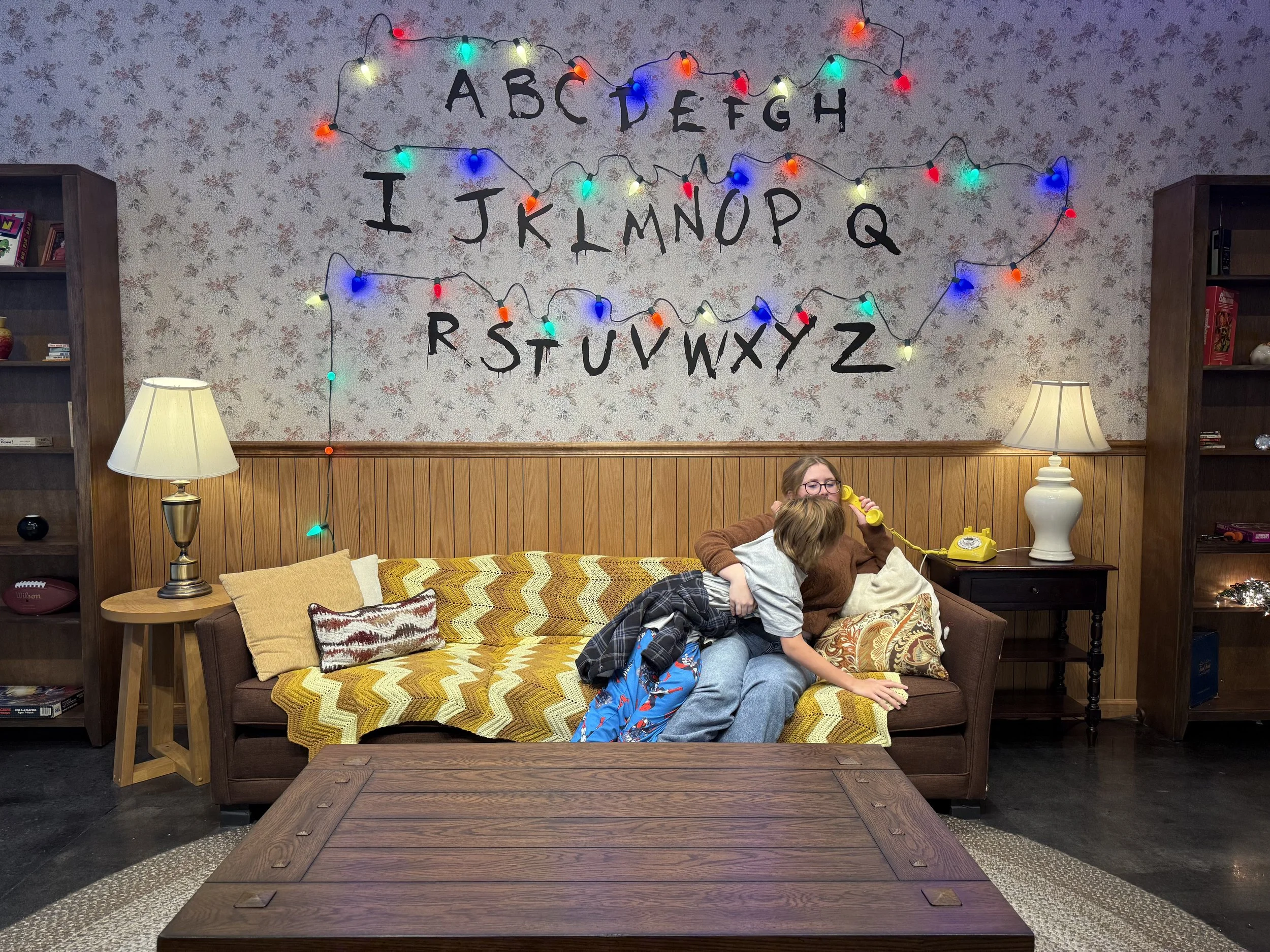
Looking from the mall into Netflix House, you're greeted by the living room set from Stranger Things—complete with the iconic yellow rotary phone, vintage wallpaper, and Wheeler family couch. It's Instagram-ready, nostalgia-rich, and immediately inviting.
But here's what separates this from typical retail activations: there are friendly, outgoing staff nearby actively encouraging you to sit, touch, and immerse yourself in the scene. No "please don't touch" signs. No roped-off barriers. Just genuine - and human - encouragement to interact.
This matters more than you might think. Gen Z and Gen Alpha have grown up in a world where experiences are carefully curated for social media but often feel performative and empty. Netflix House flips that script—it wants you to engage, and it employs actual humans (not just signage) to tell you so.
My girls were obsessed. And not just with taking photos on-site: after our visit they were immediately compelled to hunt down that yellow rotary phone to buy. (Yes, we now own a vintage rotary phone despite having no landline to plug it into. Thanks, Netflix.)
The Behavioral Science at Work
What Netflix understands that many brands miss is this: people don't just want to see their favorite stories—they want to step inside them.
From a consumer psychology perspective, Netflix House delivers on multiple well-being needs simultaneously:
Positive Emotion: The delight of discovery, nostalgia, playfulness
Engagement: Active participation, not passive viewing
Relationships: Shared experiences with friends/family (we bonded over finding Easter eggs throughout)
Meaning: Connection to stories and fandoms that matter to them
This isn't just clever marketing. It's experience design that taps into the institutional void we've been talking about—Gen Z and Gen Alpha are desperate for places to be together that aren't school, home, or doom-scrolling on their phones.
Beyond the Photo Op: The Business Model
Deeper into Netflix House, you'll find:
A full gift shop featuring both Netflix merch AND local products (smart move—it signals community integration, not just corporate extraction - and who among us doesn't love a good Eagles shirt?)
A café and bar (because dwell time = spending, and caffeine + alcohol = margin)
Smaller experiential vignettes scattered throughout
A full-scale theater with rotating screenings, sneak peeks, and limited runs
And of course, the real profit drivers: ticketed experiences. At King of Prussia, there's a Squid Game obstacle course where visitors pay to compete (brilliantly tapping into Achievement + Engagement needs), plus rotating paid activations tied to current Netflix programming.
The Free-to-Paid Conversion Funnel
Here's the genius of the model:
Free entry removes friction. You can walk in, take photos, browse the gift shop, and leave without spending a dime. This drives foot traffic, social media content, and brand affinity.
But once you're inside and emotionally invested in the experience, the conversion opportunities are everywhere:
Café purchases (impulse, low commitment)
Gift shop items (that Iggles shirt!)
Paid experiences (higher commitment, but you're already there and your kids are begging)
Theater screenings (positioned as exclusive/special access)
It's a tiered engagement model that meets people where they are—casual browsers can stay casual, but superfans can go deep. And everyone in between can calibrate their spending to their interest level.
Why This Works for Gen Z + Gen Alpha
My daughters' reaction tells the whole story. They wanted to:
Touch everything
Hunt for hidden details
Recreate scenes they'd watched
Buy physical objects that connected them to the story
Tell their friends about it immediately
These gens don’t separate digital and physical experiences—they want both, seamlessly integrated. Netflix House delivers that. It's not "come see props from the show" (passive, museum-like). It's "step into the show, play in it, make it yours."
And critically: it's repeatable. With fresh experiences dropping regularly and rotating content tied to new releases, there's always a reason to come back. Netflix has built a third place for fandoms—and Gen Z/Gen Alpha will keep showing up.
Sidenote - the employees here are amazing! Every single one wanted to share something with us, tell us about something we didn't know and find out more about what we liked. I don't know if this is part of the corporate strategy, but certainly felt like the employees were being activated to collect feedback that one can only hope creates a loop with CX and ensures relevant experiences continue. Side sidenote… If I was looking for a job in entertainment, I would absolutely be applying at Netflix House.
What Brands Can Learn
If you're building consumer experiences for younger audiences:
Permission matters more than polish. Staff actively encouraging interaction beats pristine-but-untouchable displays every time.
Free-to-paid models reduce barrier to entry. Let people explore before asking for commitment.
Tiered engagement serves different fan intensities. Casual fans browse; superfans buy tickets to Squid Game challenges.
Employ actual humans, not just technology. My daughters responded to the friendly staff as much as the sets themselves. And honestly, because it’s such a complex set of experiences, we would’ve been lost without real people to help way find.
Design for return visits. Static experiences die. Rotating content creates habit loops. We go every time we’re at the mall.
Integrate physical products thoughtfully. That rotary phone purchase wasn't just merch—it was a way to take the experience home.
Netflix House isn't just a marketing activation. It's a case study in designing brand experiences that meet real human needs—belonging, play, connection, identity expression—while driving measurable business outcomes.
And yes, we still have that yellow rotary phone. It sits on my daughter's desk as a daily reminder that the best brand experiences don't just create moments—they create memories worth keeping.
Would love to hear others’ experiences at Netflix House - or with similar experiences in non-traditional entertainment settings.