Want to understand GenZ & Alpha? Go see TDAC.
As a researcher, the #1 thing you can do to understand your customers/consumers/prospects is to put yourself in their shoes. But don’t just walk “a mile.” Really go there, alongside them: watch what they respond to, how they react, when they hold back and when they lean in.
You can ask questions, but I’ve gotten used to not expecting really helpful answers. The insights come from internalizing their experience and emotions. If you’re suspending your own point of view while you observe, it’ll come.
The best ethnography is participant-led: not a survey or IDI in disguise, but an invitation to simply spend time together and get to know your people better.
This is the spirit I took into the theater to see "The Amazing Digital Circus: The Last Act” this weekend.
At a high-level, TADC is a streaming series that tells the story of a group of humans whose minds are permanently trapped inside a surreal, 90s-style virtual reality simulation. In digital limbo, they cope with personal traumas and risk losing their minds and transforming into aggressive, formless monsters known as "abstracted" beings. Glitch Productions and Fathom Events brought the feature-length series finale to roughly 2,200+ U.S. theaters and international cinemas for a limited, 2-week run prior to launching it on streaming.
Of course, the kids HAD TO SEE IT. And as a mom, and generational researcher, so did I.
So I sat in a theater full of Gen Z and Gen Alpha kids and watched something I can only describe as gleefully disturbing. Dark, anarchic, tender in the most unexpected moments, and absolutely theirs in a way that felt almost sacred.
I came out with zero answers and about a thousand and ten new questions. Which, frankly, is a pretty good outcome for a researcher.
The Amazing Digital Circus made a theater full of young people erupt at jokes I couldn't decode, and go completely still during moments that blindsided me with their emotional weight. AI, religion, politics, social commentary - it’s all there, and overwhelmed my small brain, while appearing to truly connect to them.
What I loved was what the film doesn’t do: The Amazing Digital Circus doesn't try to explain. It reflects. And that's the insight.
Something important the experience confirmed for me: Gen Z and Gen Alpha are not a generation. They are a collection of subcultures operating under the same generational umbrella. This show, in its dark, surreal, meme-native, emotionally complex glory - is beloved. So is Sponge Bob. So is cottage-core. And sneaker culture. And academic rigor and organized chaos. These gens are all these things.
They’re not unified audiences with unified worldviews. They are not Millennials with shorter attention spans. They are not Gen X with better phones. They are something genuinely new, shaped by digital nativity, algorithmic identity formation, and a level of cultural fluency that moves faster than any research cycle can track.
It’s exactly what the frameworks I’ve built - the Z-Lens and Alpha Lens - are intended to help understand. We don’t claim "all Gen Z thinks this way." Our lenses are frameworks that orient the cultural context, formative pressures, and behavioral tendencies that shape this cohort's subcultures, including how those subcultures diverge from each other. Think of it like a camera lens. The lens doesn't flatten what you're looking at: it helps you focus on it. You still see complexity. You just see it more clearly than if you were shooting blind.
And after seeing TADC I’m more convinced than ever that we - researchers, marketers, parents, community members - have an obligation to work a little harder to understand what our kids encounter in this world, which is so very different from the one we grew up in.
Go see the show. Take notes. Leave confused. You're ok, I’m ok - the kids are ok.
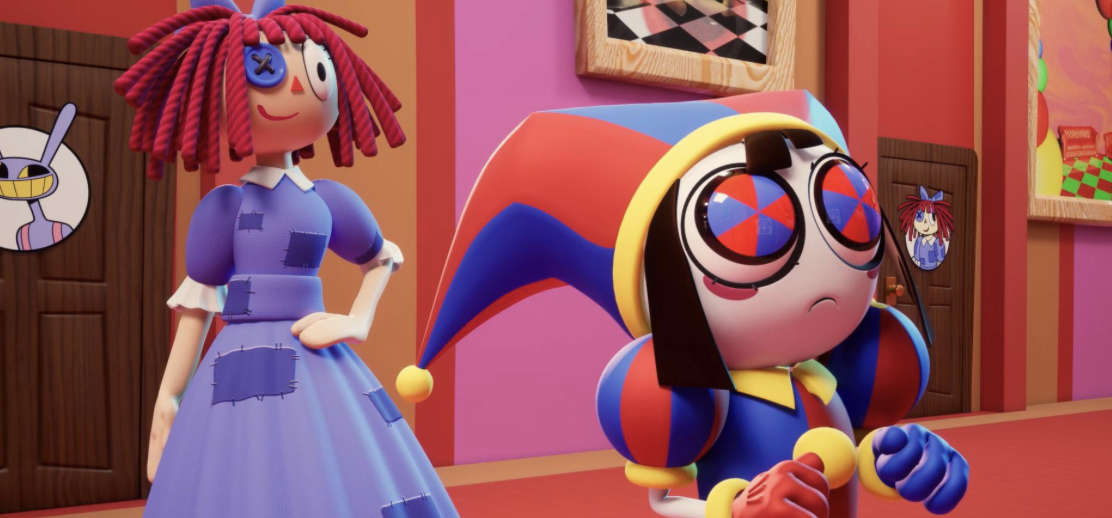
The Amazing Digital Circus: The Last Act
Stacy G. is a fractional Chief Insights Officer, RIVA-certified qualitative researcher, and founder of Voxelle Insights. Her generational consumer frameworks — FemmeLens, Z-Lens, and AlphaLens — help brands move beyond demographic shortcuts to genuine consumer understanding.